Motorbike Trip to Spiti Valley
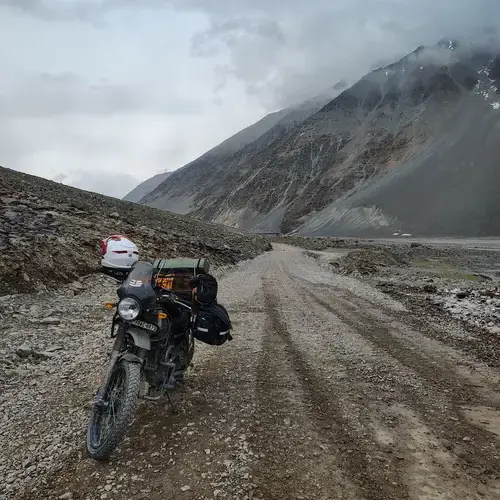
Spiti Valley, located in Himachal Pradesh, is a well-known route for off-road travel, especially among those exploring by motorbike. The circuit is commonly accessed from either Shimla or Manali, as both towns have easy availability of motorbike rental services. Starting the journey from Shimla and ending at Manali is advisable. This route allows for a gradual transition into tougher terrain.
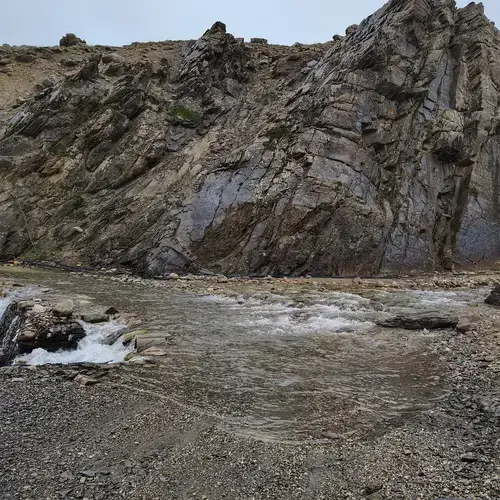
The road from Shimla to Kaza is mostly well-maintained, with only a few rough stretches. However, the riding conditions begin to change after Kaza. After crossing Lohsar, the roads become increasingly difficult. The final stretch of around 100 to 150 kilometers before reaching Manali is particularly demanding. Water from multiple waterfalls often flows directly over the road, creating slippery and uneven patches. Even when the route is dry, the condition remains difficult due to frequent snowfall and landslides in the region throughout the year.
Map of Spiti valley circuit
Here's a simple map (not to scale or compare) highlighting important locations on Spiti valley circuit.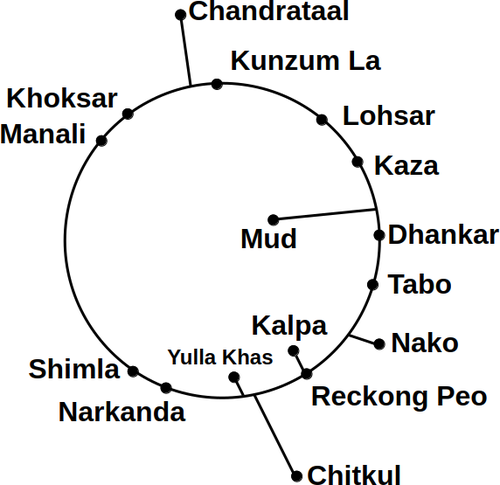
Preparing for a trip to Spiti valley
- Use a motorbike with good suspension to reduce strain on your back. An adventure bike is better suited for handling the rough road between Lohsar and Manali. For guidance on preparing your bike, refer to this article on how to accessorize your motorbike for carrying luggage and other essentials. Also check this travel essentials list for your Spiti valley trip.
- Mobile network is unreliable in many areas. Carry sufficient cash. Jio had better coverage in remote parts of the valley.
- Carry a fuel container, especially if your vehicle has low fuel efficiency.
- Keep a small first aid kit. Include basic dressing material and medicines for common health issues.
- Keep warm clothes within easy reach. Weather can change quickly, especially around Kunzum La.


Information on places of interest in Spiti valley
Assuming that the trip begins from Shimla, here are the places a traveler can consider visiting. The list follows an anti-clockwise circuit of Spiti Valley:
- Shimla
- Narkanda
- Rampur
- Yulla Khas and Yulla Kanda
- Chitkul
- Kalpa and Reckong Peo
- Kinnaur Kailash
- Nako
- Tabo
- Dhankar
- Pin Valley and Mud
- Kaza – Hikkim, Komic and Langza
- Key
- Chicham
- Lohsar
- Kunzum La
- Chandrataal
- Khoksar
- Manali
Shimla

Shimla is the capital of Himachal Pradesh. It attracts a large number of tourists and has become highly commercialized. There are limited places to explore within the city. Jaku Temple and the Mall Road starting from the Ridge are the main spots of interest. If you plan to spend time here, you can refer to this blog for other places of interest in Shimla.
Narkanda
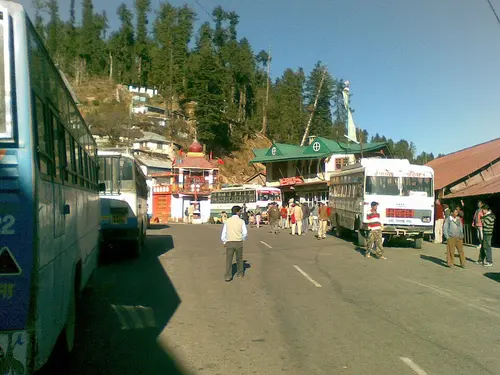
Narkanda is a short drive from Shimla and makes a convenient stop for refreshments. If time permits, consider a quick visit to Hatu Peak. There's a small temple at the top and open views of the surrounding Himalayan range. Narkanda also has several auto mechanic shops, which can be useful in case of any vehicle issues. Other places in the area may not be worth a detour, but if you have extra time, check this blog on places of interest in Narkanda.
Rampur
This is the last town where one can find mechanics with all available spare parts. After this one would have to wait till Kaza for serious mechanical issues.Yulla Khas
Yulla Khas is a small village in the Spiti Valley region. It is a suitable stop for those interested in trekking, especially at the beginning of a Spiti Valley trip.
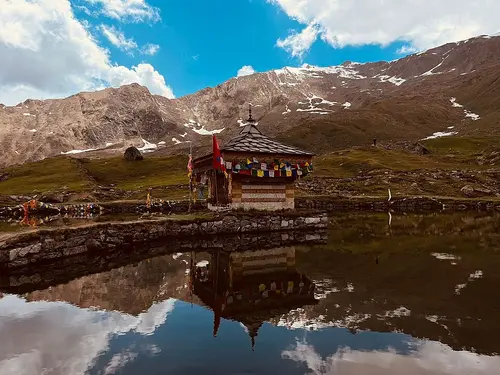
The village marks the starting point for a trek to Yulla Kanda, which is known for housing one of the highest altitude Krishna temples in the world. The trek is moderately difficult and can be completed in a day by those with reasonable fitness.
Chitkul
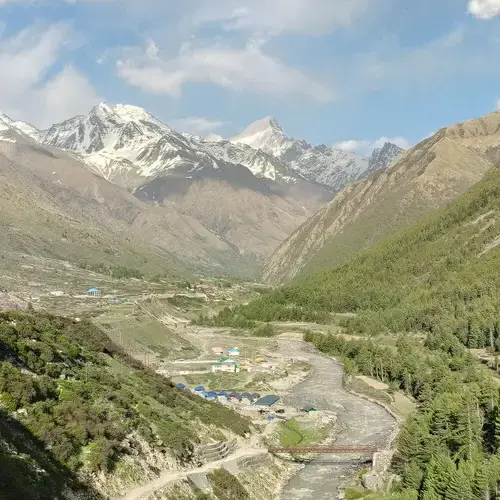
Chitkul is the last village on the road leading to the India-Tibet border. The road conditions are poor, so it is best to avoid driving after dark. Mobile network is weak, and internet access is limited. Carry enough cash for your stay.
If you are carrying camping gear, there are multiple spots suitable for camping near the river, located about 1–2 kilometers from the village. The village has seen an increase in hotel construction to support tourism, but it remains a quiet stop on the circuit.
Several small villages fall along the route to Chitkul. One such example is Raksham. These villages offer a more local experience and are worth exploring if time allows.
Things to do
-
Visit the riverside at sunrise. The afternoon sun can be harsh and make it difficult to stay outdoors.

Riverside view in Chitkul -
Hike to the national flag point through the village. You can continue further along the trail for views of the village and the Indo-Tibet border.
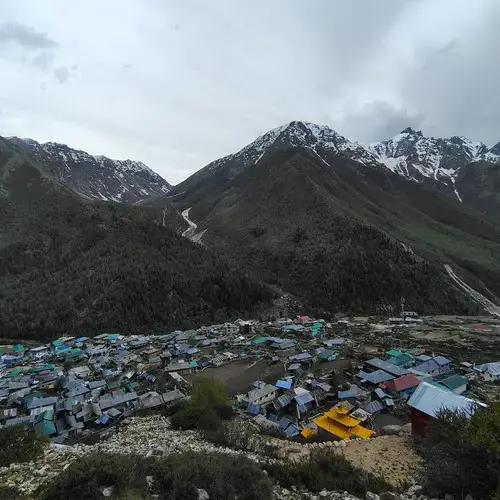
View of Chitkul village while hiking to the national flag point - Take a short ride from Chitkul towards the Indo-Tibet border.
Kalpa and Reckong Peo
Kalpa and Reckong Peo can be compared to Dharamkot and Mcleodganj in Dharamshala. Kalpa is quieter, while Reckong Peo hosts the main market. Staying in Kalpa is preferable as it is less commercialized and closer to key points of interest. Though it’s hard to find proper camping spots in Kalpa, you may find a makeshift space beyond the Kalpa view point (locally known as Suicide Point) along the roadside.
Things to do
-
Visit the local monastery and nearby eateries to try local food. Walking further down from the monastery leads to small temples in the village.
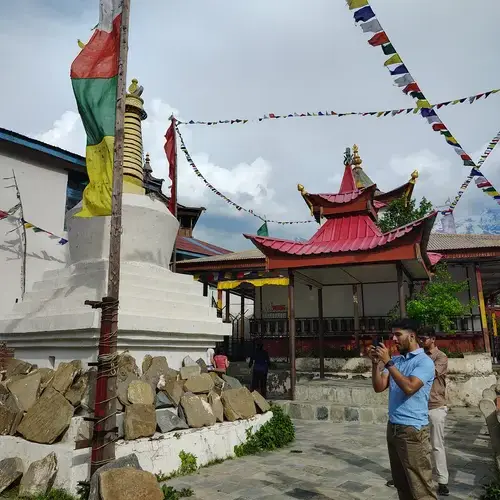
Kalpa monastery -
Drive to Kalpa view point (Suicide Point) for a clear view of the surrounding mountains. On the way, you may get a distant glimpse of Kinnaur Kailash. It appears small and pointed, so you might need help from locals to identify it.
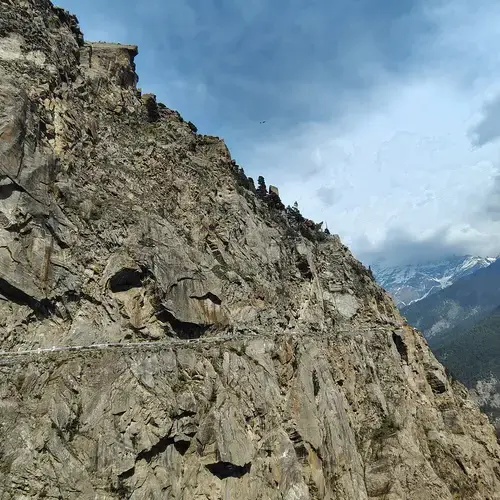
Suicide point 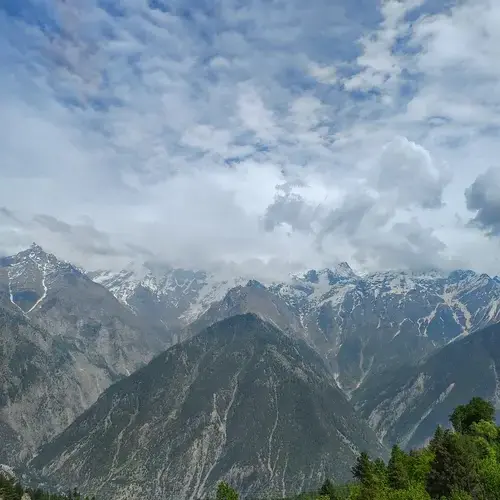
View from suicide point
Kinnaur Kailash
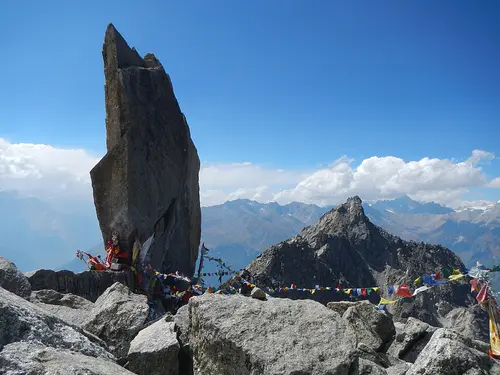
Kinnaur Kailash holds religious significance in both Hinduism and Buddhism. The trek to Kinnaur Kailash is open for a limited period, usually during August when the terrain becomes safe for hiking.
The trek can be completed independently in two days, with an overnight stop at Ganesh Meadow. Based on local information, basic camping and food facilities are available at Ganesh Meadow, so it is advised not to carry extra gear or supplies.
Nako

Nako is a high-altitude village located in the Spiti Valley region. Though smaller in size compared to other villages, it offers wide views of the valley below.
While in Nako, you can visit the local monastery and observe the surrounding agricultural landscape. The village is a short detour from the main route to Tabo and can be covered with minimal deviation from the circuit.
Tabo
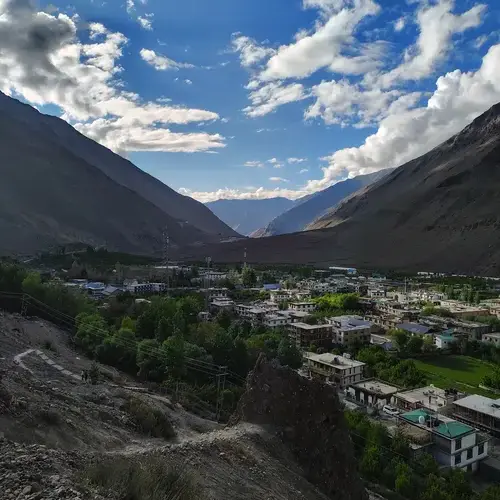
Tabo is one of the most well-planned towns in Spiti Valley. It has reliable mobile network coverage, internet access, and a market that offers both essential and non-essential supplies.
Homestays here often provide electricity backup, which makes Tabo a suitable option for those considering remote work. For a long-term stay in Spiti Valley, Tabo stands out as a practical choice.
Things to do

Two main places of interest in Tabo are the monastery and a series of caves lining the nearby mountains. The monastery is located in the main market and can be easily reached on foot.
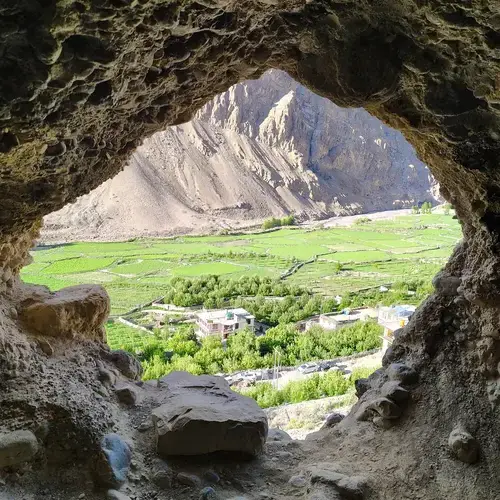
The caves require a short hike from the main road. The trail is unpaved and needs to be navigated carefully. Some larger caves involve effort to climb in and out, both physically and mentally, and may carry some risk. It is best to visit the caves early in the morning or around sunset, as the mid-day heat can make the hike uncomfortable.
Dhankar
Things to do
- Visit both the new and old Dhankar monasteries. The new monastery was built to accommodate the growing number of monks. These two structures reflect the differences in architecture and daily life between generations.
- Hike to Dhankar Lake. The trail takes about an hour, so carry enough water, especially if you're hiking in the afternoon when it can get quite hot. The lake may not be visible until the end of the trail, but according to local belief, it has never dried up.
Pin Valley
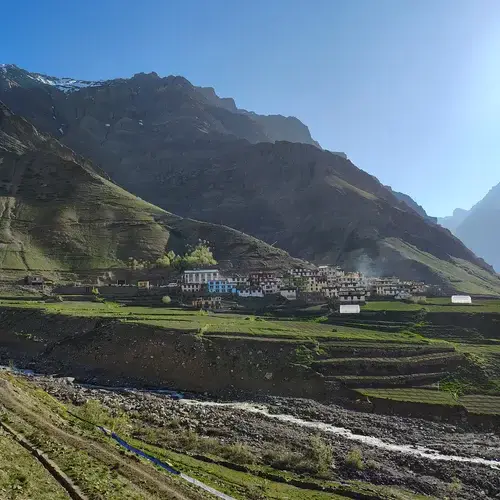

Pin Valley is one of the less visited parts of Spiti Valley by tourists. However, it is well known among trekkers. Mud, the last village in the valley, serves as the starting point for several multi-day hikes. The road conditions in Pin Valley are currently poor, but road work was in progress during my visit in May 2025, so it may improve soon. Weather in Mud remains cold throughout the year, so make sure to carry warm clothing.
Things to do
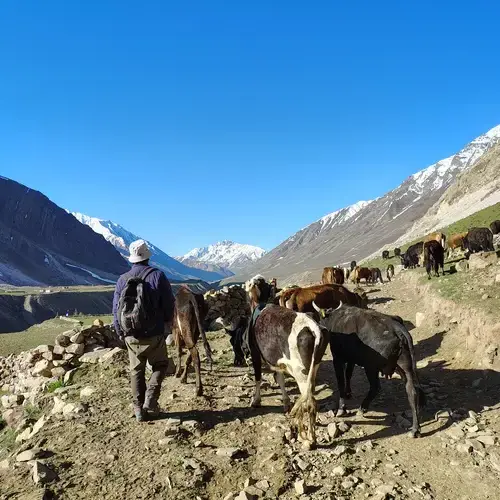
There are many trails in and around Mud suitable for both casual walks and longer hikes. During a morning walk, I came across locals grazing their cattle and joined them for a few kilometers.
Kaza
Kaza is the commercial hub of Spiti Valley. The town is densely packed with hotels, homestays, and restaurants. I made a brief stop here for lunch and chose not to stay overnight due to the congestion.
Things to do
- Kaza Monastery is located in the center of the town and is easily accessible. I was unable to enter the premises during my visit as a religious ceremony was in progress.
- While I didn’t find Kaza appealing for an overnight stay, many travelers choose to spend a couple of days here to rest, shop, and explore nearby villages—Hikkim, Komic, and Langza. These villages are much quieter compared to Kaza and are part of a short detour circuit. I recommend visiting this area for its wide landscapes and sparse settlements. I had considered camping here, but strong winds made it unsuitable without a high-quality tent. Tents with fiber poles may not withstand the wind.
Key

Key village is home to the well-known Key Monastery. I visited the monastery early in the morning around 7 a.m., shortly after it opened. A monk who was performing the morning rituals offered me a personal tour of the entire monastery. The mountain views from the monastery are wide and open.
Chicham
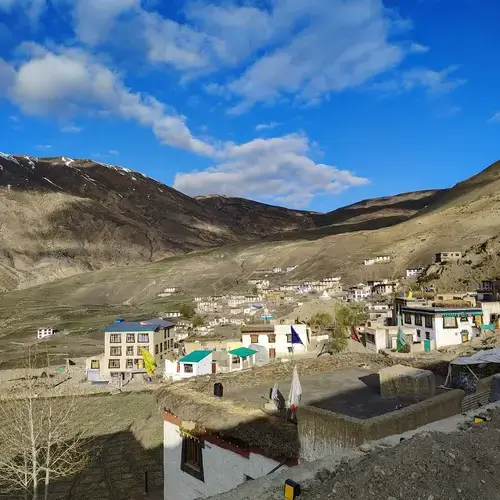
Chicham is a small village located after Key on the Spiti circuit. For those looking to avoid the crowded atmosphere in Kaza, Chicham can be considered as a quieter alternative for an overnight stay.
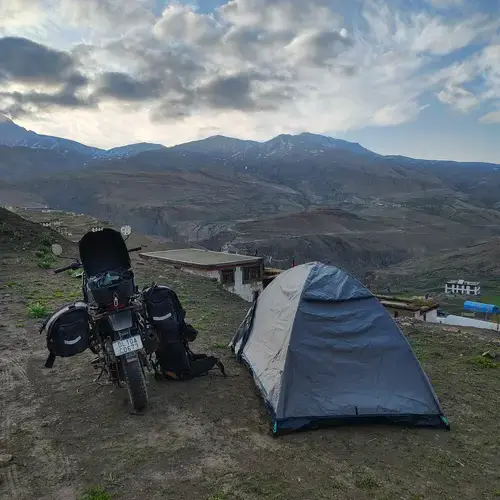
I chose not to stay in Kaza and instead camped in Chicham for a night. When I reached the village around 10 p.m., the sky was completely clear. However, within an hour, a heavy storm hit. I had to sit inside the tent and hold it down for two hours to prevent it from collapsing. This experience is a reminder that weather in Spiti can change quickly, so always be prepared.
Things to do
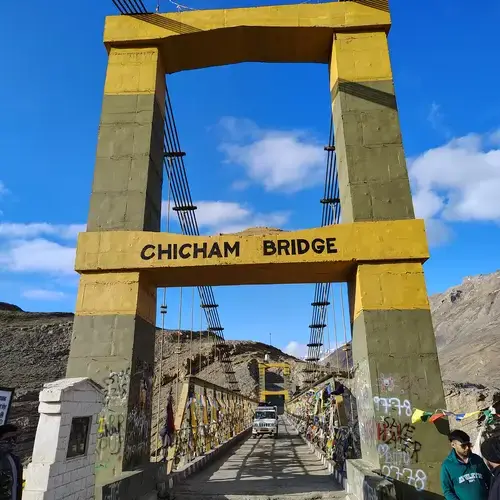
Chicham is best known for the Chicham Bridge. I saw the bridge multiple times but didn’t find it particularly impressive. Still, it is a popular stop for photos and selfies, and since it lies on the main Spiti route, it’s worth a quick visit.
Lohsar
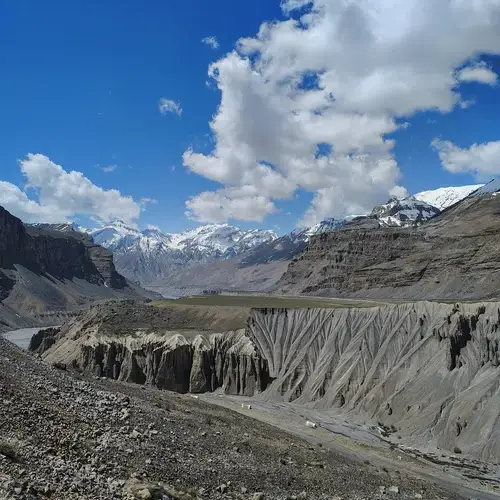
Lohsar is the last village in Spiti Valley where you can find affordable accommodation and food before heading towards Manali. After this point, there are no major villages until the circuit ends. While there are some tent stays available near Chandratal, they tend to be expensive.
If you do not reach Lohsar before 12 p.m., it’s better to stay overnight. The road beyond Lohsar is challenging and requires several hours of slow and careful driving to reach Manali. This stretch is also my favourite part of the entire circuit, with wide landscapes and raw terrain. Driving in the dark will cause you to miss out on these views.
Kunzum La
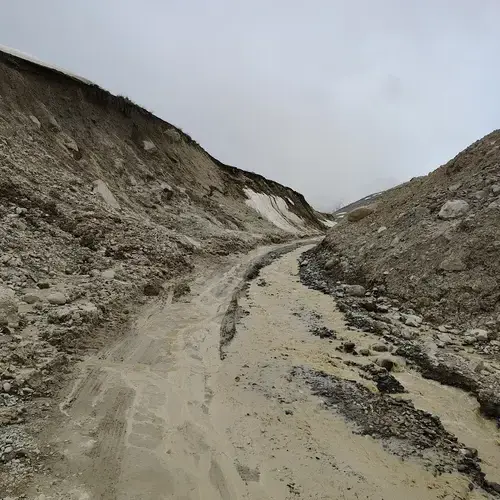
Kunzum La is a high-altitude mountain pass that receives snowfall throughout the year. Due to safety concerns, access is restricted until late May or early June. Even after the route is officially opened, it may be closed again depending on weather conditions.
I was fortunate to drive through Kunzum La and reach Chandratal in late May. However, just a few days later, the road was closed again for both two-wheelers and four-wheelers because of heavy snowfall.
Things to do
Due to extreme cold and snowfall, I couldn't spend much time at Kunzum La. However, if conditions allow, here are two points of interest worth visiting:
-
War Memorial
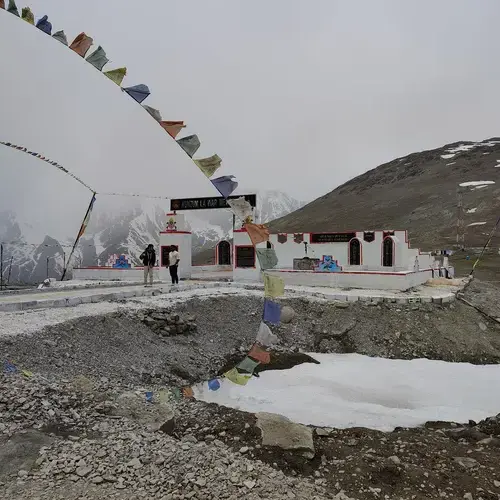
War memorial at Kunzum La -
Kunzum Mata Temple

Kunzum mata temple
Chandrataal
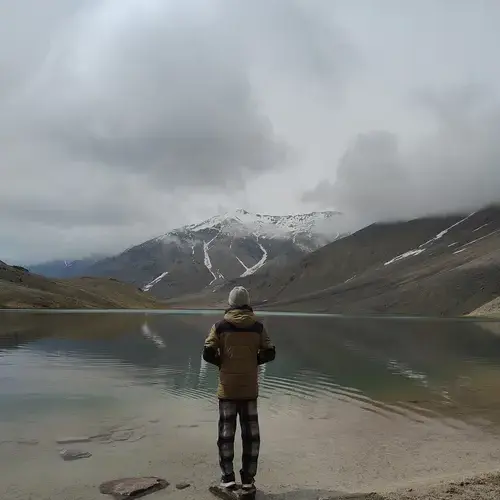
Chandrataal is a short detour from the main Spiti Valley circuit. After Kunzum La, a separate checkpoint controls access to the lake area to ensure visitor safety. The road to Chandrataal is rough and includes two major water crossings.
Once you reach the designated parking area, a 1 km walk on an easy trail leads to the lake. This path is simple and may not appeal to those looking for a challenging hike. Camping near Chandrataal is prohibited under local rules. While tent accommodations are available in the area, they are located far from the lake and do not offer a direct view.
If you're interested in hiking and camping, consider exploring alternative routes to Chandrataal that offer a better experience.
Khoksar
Khoksar is the first town on the highway after completing the rough 100 km stretch from Spiti Valley. It's a good place to stop for food or take a break.
If you're traveling during peak season and prefer to avoid the tourist crowd in Manali, staying in Khoksar can be a practical alternative. Basic accommodation options are available here.
Manali
Manali marks the end of the Spiti Valley circuit. It is a major tourist destination with plenty of hotels, cafes, and traffic, especially during peak season. While many travelers stop here to rest and recover, the crowds and commercialization can be overwhelming after the remote experience of Spiti Valley.
If you're not keen on busy streets and packed markets, consider staying on the outskirts of Manali or moving ahead towards less crowded areas like Naggar or Solang.
Author
Anurag Gupta is a frequent traveller and an advocate of eco-tourism and sustainable living. He helps local businesses in promoting their visibility and accessibility. Anurag Gupta is also an educator and a technology consultant. He is an M.S. graduate in Electrical and Computer Engineering from Cornell University. He also holds an M.Tech degree in Systems and Control Engineering and a B.Tech degree in Electrical Engineering from the Indian Institute of Technology, Bombay.Add Comment
This policy contains information about your privacy. By posting, you are declaring that you understand this policy:
- Your name, rating, website address, town, country, state and comment will be publicly displayed if entered.
- Aside from the data entered into these form fields, other stored data about your comment will include:
- Your IP address (not displayed)
- The time/date of your submission (displayed)
- Your email address will not be shared. It is collected for only two reasons:
- Administrative purposes, should a need to contact you arise.
- To inform you of new comments, should you subscribe to receive notifications.
- A cookie may be set on your computer. This is used to remember your inputs. It will expire by itself.
This policy is subject to change at any time and without notice.
These terms and conditions contain rules about posting comments. By submitting a comment, you are declaring that you agree with these rules:
- Although the administrator will attempt to moderate comments, it is impossible for every comment to have been moderated at any given time.
- You acknowledge that all comments express the views and opinions of the original author and not those of the administrator.
- You agree not to post any material which is knowingly false, obscene, hateful, threatening, harassing or invasive of a person's privacy.
- The administrator has the right to edit, move or remove any comment for any reason and without notice.
Failure to comply with these rules may result in being banned from submitting further comments.
These terms and conditions are subject to change at any time and without notice.
Comments